Jittery new wave · Art-punk · Nervous pop

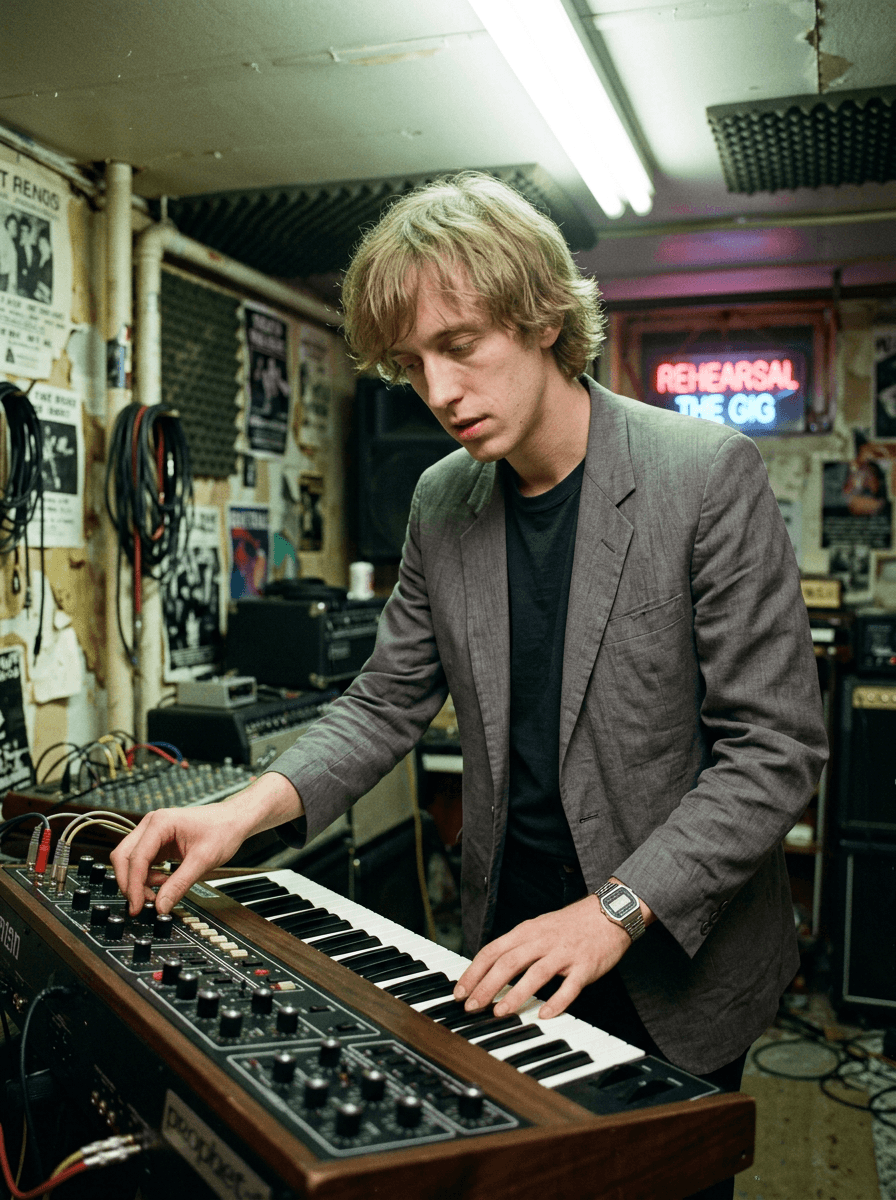
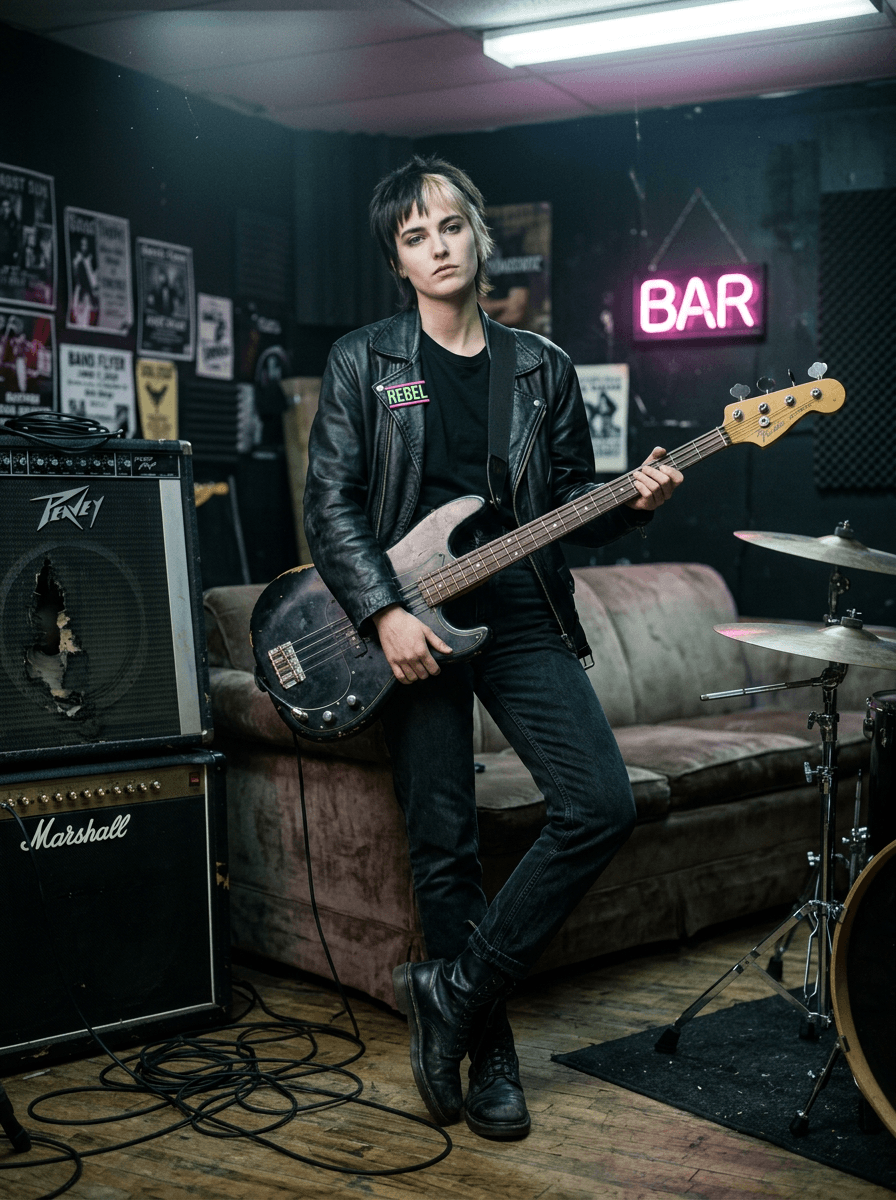
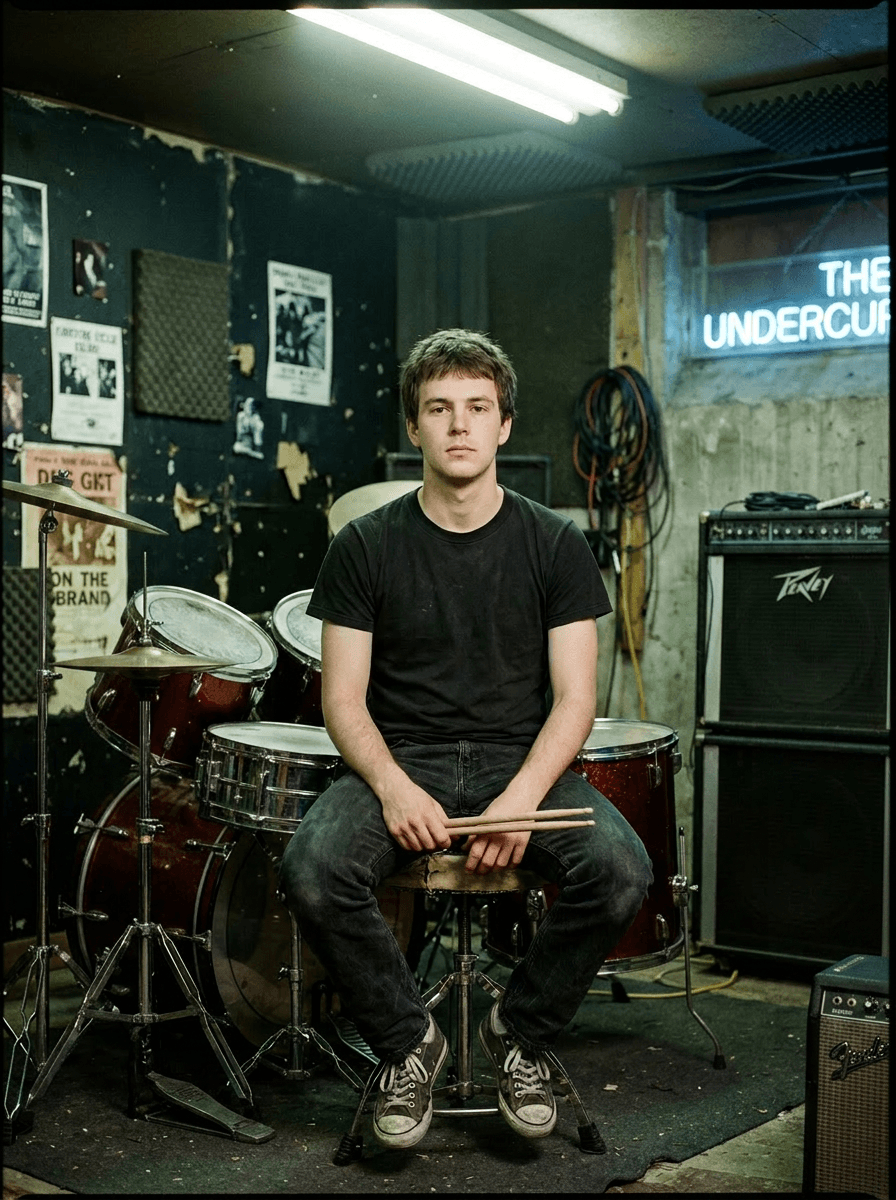
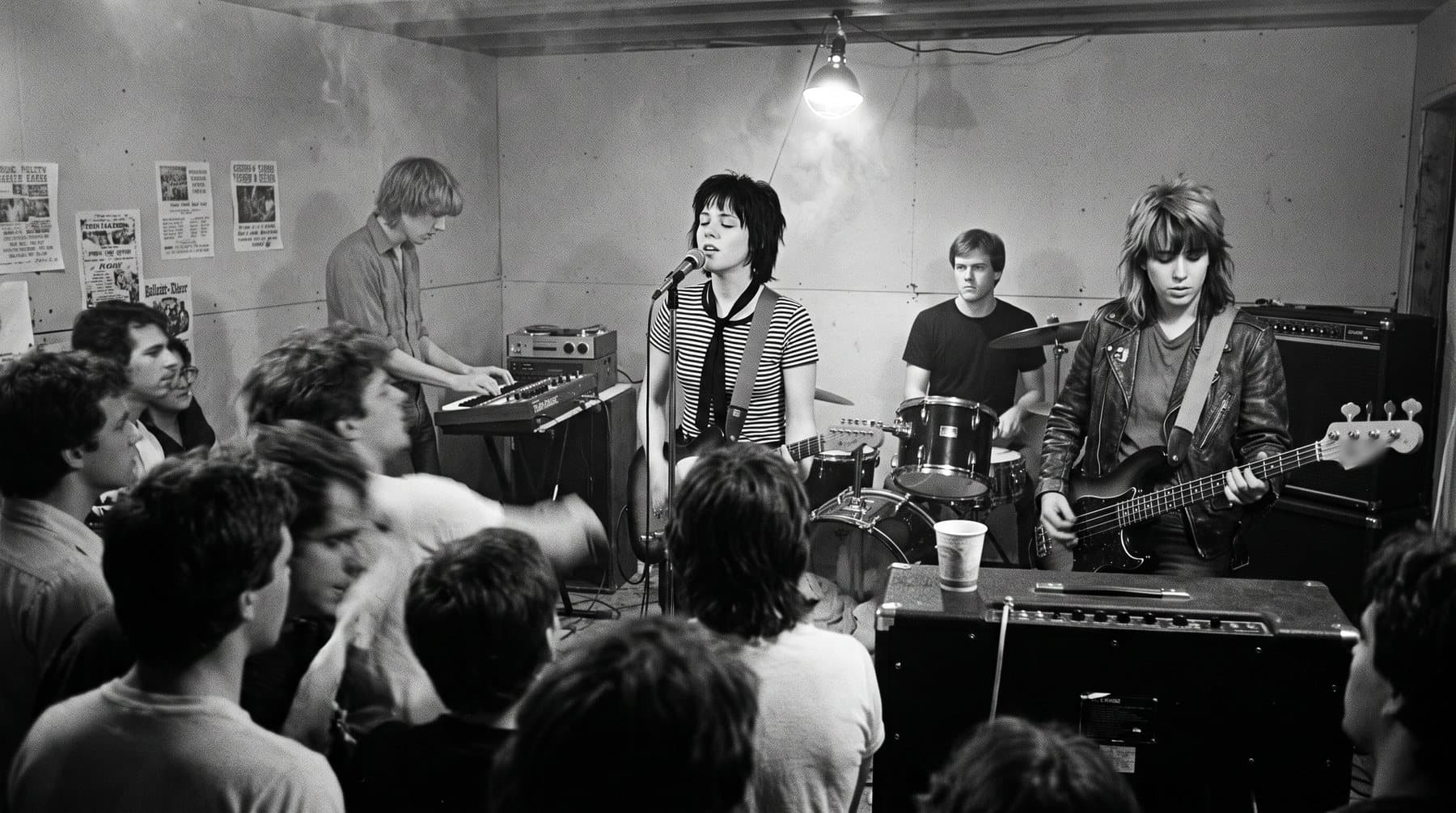
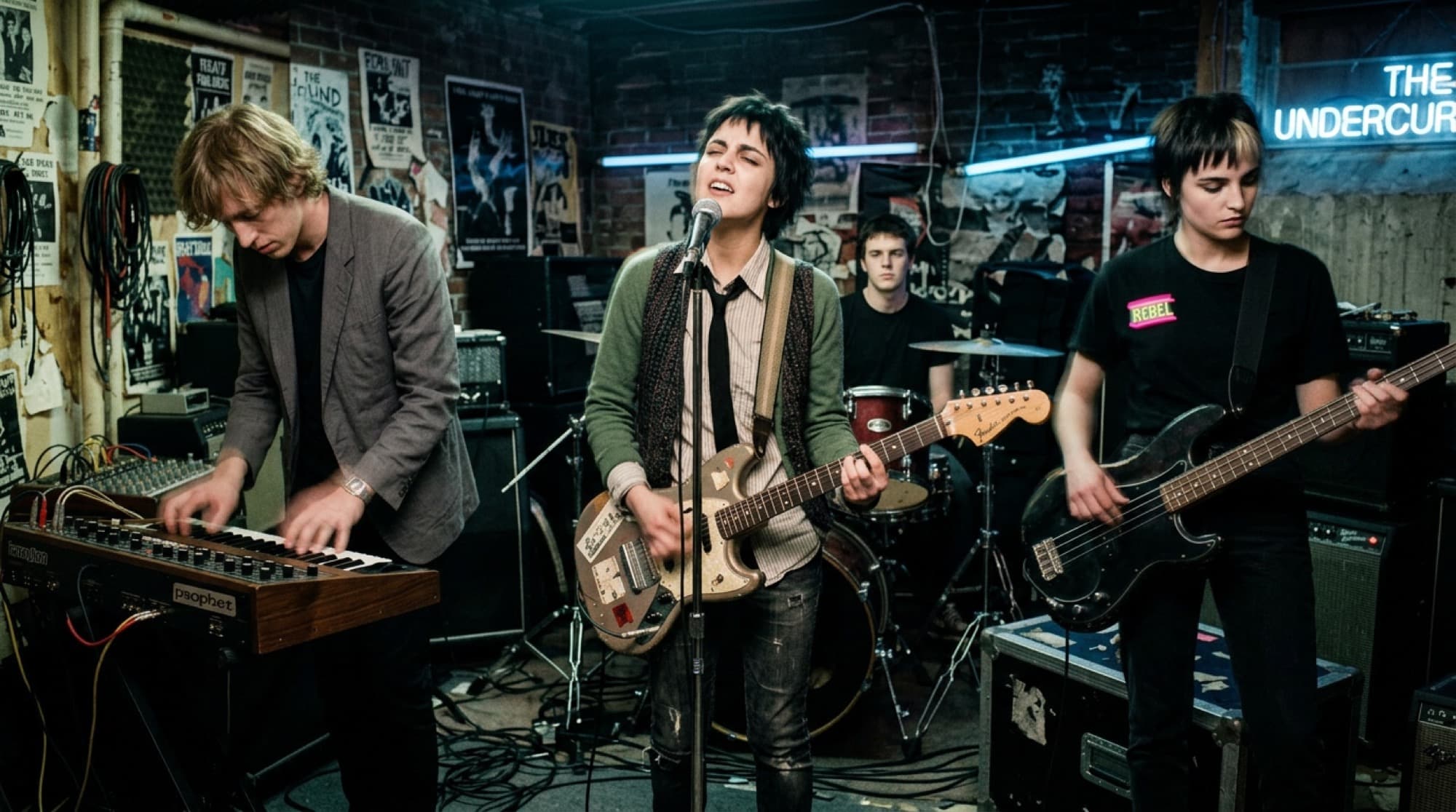
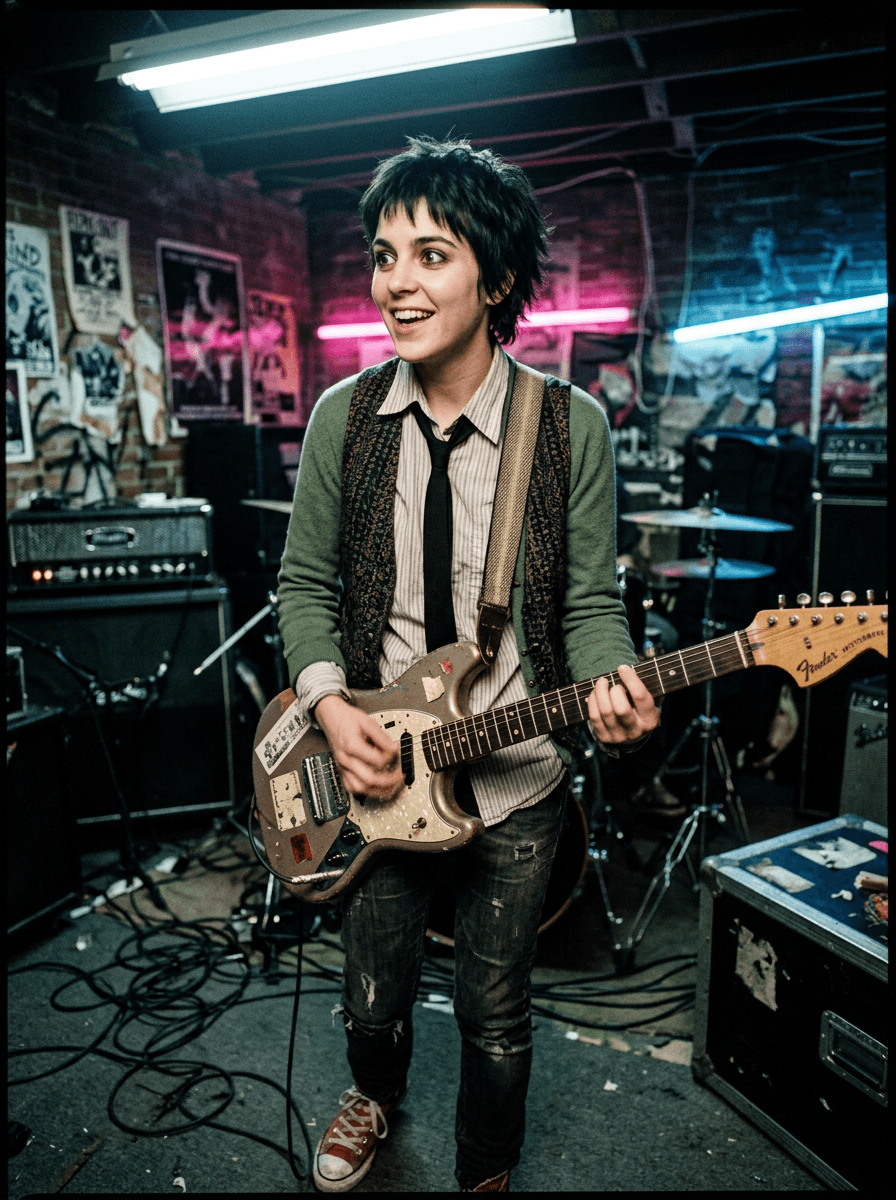
Alternate Squirrel in a basement rehearsal room: Kip Hessler at the synthesizer, Roni Klepp singing with a guitar, Lyle Brumm at the drums and Sandy Corbo on bass
The four, in rehearsal. Same room, different arrangement.

Alternate. Then alternate that.

Nothing here repeats.

Formed
Lawrence, Kansas, 1980
Ended
1986, after one repeat
Label
Skittish Records
Method
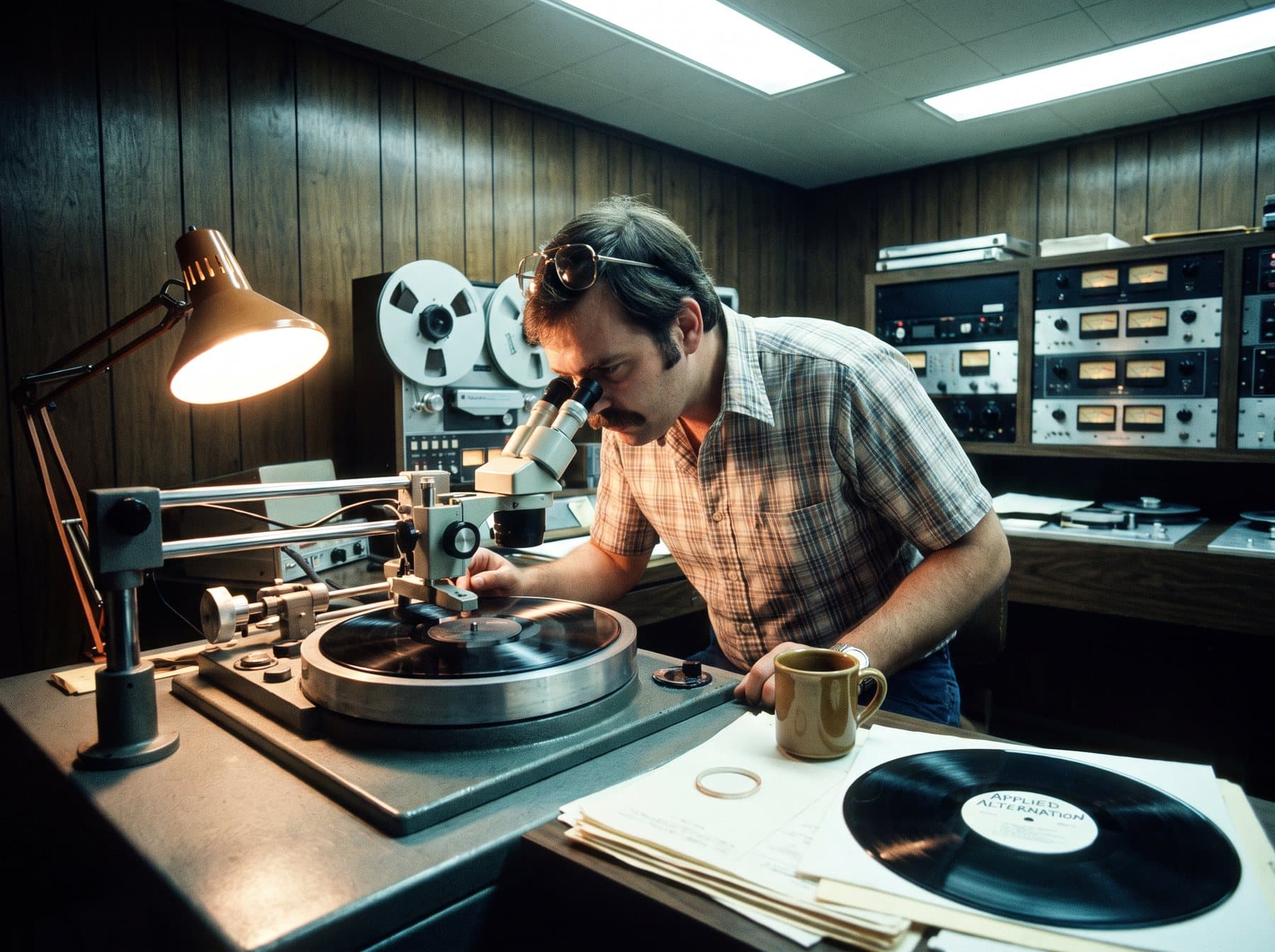
Applied Alternation

The Counter · Fall 1979

The name was in place a year before the band.

The Barista

In the fall of 1979, she spent a semester more or less living at Milo's, a coffeehouse three blocks off the University of Kansas campus. There was a barista there — a wiry, dark-haired man named Owen — who kept two cups going at all times: a small ceramic for espresso, a larger mug for the drip. He would pour, swirl, sip the espresso; pour, swirl, sip the drip; return to the espresso and swirl it differently. He never held either cup still. He never swirled the same way twice.

Klepp watched him for a full winter. She started calling him, silently, "the alternate squirrel" — for the twitchy caffeinated way he moved between his cups, and for the specific look of a person doing four things at once without touching any of them for long. She never told him. She left Milo's owing $3.75 on a tab and never went back.

A year later, when four people got stuck together in a double-booked practice room, the name was already in place. She said it the first night. Nobody asked what it meant. Nobody ever did.

Owen the barista is not credited on any Alternate Squirrel record. He is, by Klepp's own account decades later, the reason the band existed at all.
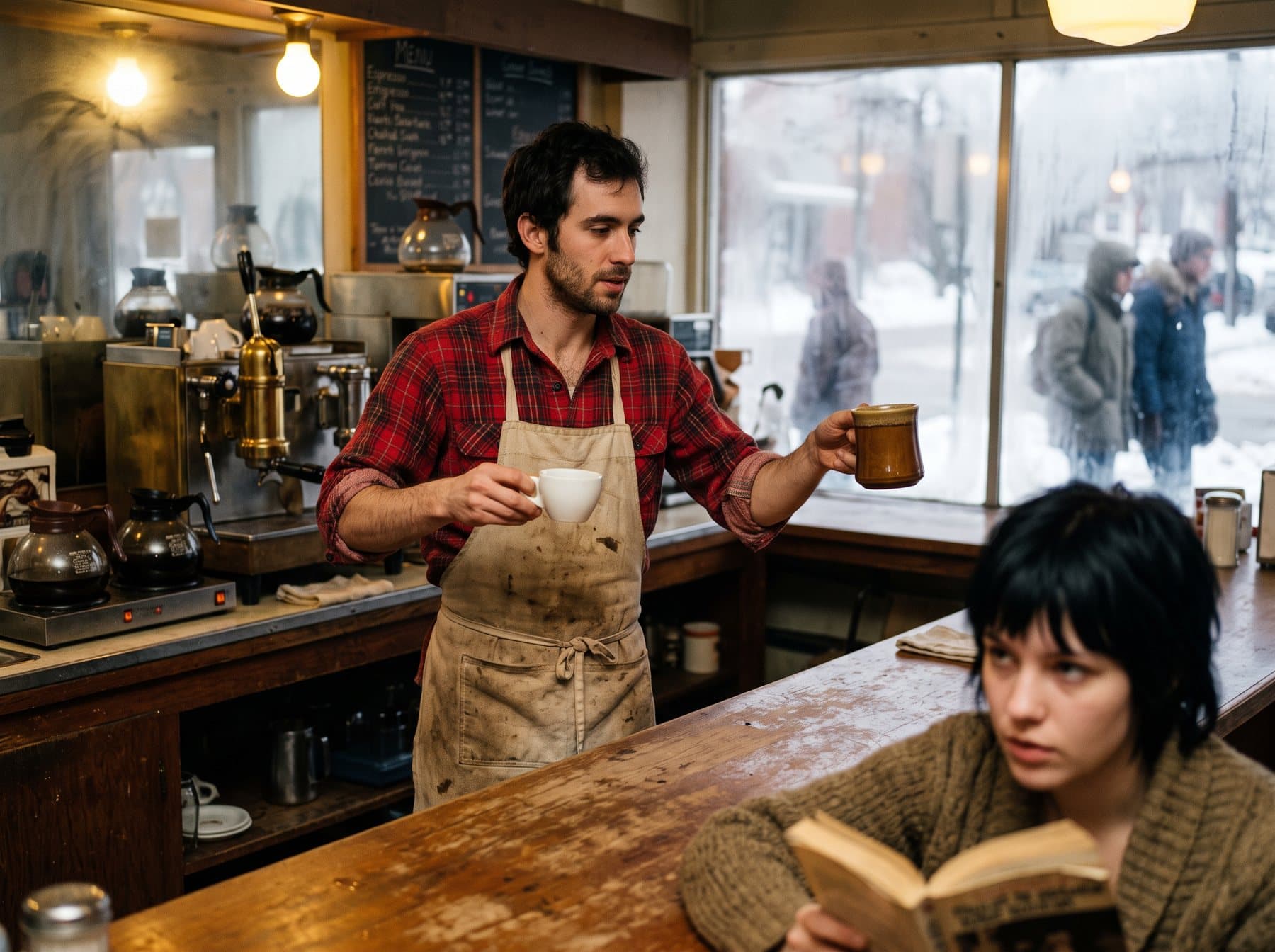
A wiry dark-haired man behind a coffeehouse counter in winter 1979, holding a small espresso cup in one hand and a large mug in the other
The counter, three blocks off campus, winter 1979. Two cups, never still. He was not told.

Three Takes

The story, as filed. No take matches another.

The archive holds the rest of the account in three parts. They are presented in order. The order was the only thing the band did not alternate.

Policy · Adopted the third night · 1980

No section will be repeated as written.

Several members understood this to be temporary. It was not.

Take 1 of 3

The Policy

Alternate Squirrel began in a double-booked university practice room in Lawrence, Kansas, in 1980. Two groups had reserved the same slot; three people left, and the four who remained — Roni Klepp, Kip Hessler, Sandy Corbo, and a drummer named Lyle Brumm who had simply been in the room and never got up — decided to play instead of argue.

They tried cover songs. They could not play any of them the same way twice. Where most bands would call that a problem, Klepp, on the third night, called it a policy: no section would ever be repeated as written. The others agreed. Several of them believed it was temporary. It became the entire method.

Take 2 of 3

Alternating Everything

The rule expanded to cover everything. The band alternated who sang, which guitar carried the line, the time signature, and the arrangement — switching mid-song, on Klepp's cue, and never settling. Songs stayed short and punchy because a piece that never repeats has nowhere comfortable to sit. Live, they were a caffeinated, herky-jerky machine that seemed permanently about to fall apart.

It did not fall apart, because of Lyle Brumm. In a band built on never repeating, Brumm was the one thing that never changed — metronomic, calm, expression unmoving, a plain t-shirt among the new-wave costumes. The alternations happened around him. Sandy Corbo made the stop-start chaos look like choreography; Kip Hessler supplied frantic synth textures from a rig he was convinced was slightly broken; Klepp rewrote the song in real time. Brumm kept the same beautiful time through all of it.

Take 3 of 3

Six Years, No Repeats

For six years and several hundred shows across the college-town circuit, Alternate Squirrel did not knowingly repeat a section. Skittish Records released the records. The band became a small local phenomenon on the strength of a live show no two attendees could describe the same way — which the band considered the point.

The end, when it came in 1986, was fitting. At a show that spring, a chorus was played twice, identically, by accident. The band stopped. They regarded it as a conclusion rather than a mistake, and did not schedule another performance. Nothing here repeats, the saying went — including, in the end, the band.

The Lineup

Two bookings. Three left. Four stayed.

All four joined in 1980. All four left in 1986. Lead vocals and the guitar line moved between them on cue. The drums did not move.

  1. Roni Klepp, lead vocals, rhythm guitar

    Roni Klepp

    Lead vocals, rhythm guitar

    On file · 1980–1986

    “If we play it the same way twice, we've stopped paying attention.”

    “No, not like that. Like that. No.”

    Now. Still refuses to play anything the same way twice. This now affects unrelated areas of her life.

  2. Kip Hessler, synthesizer, tape

    Kip Hessler

    Synthesizer, tape

    On file · 1980–1986

    “It's supposed to do that. I think.”

    Now. Still owns the synthesizer. It still works, mostly, which he considers a flaw.

  3. Sandy Corbo, bass

    Sandy Corbo

    Bass

    On file · 1980–1986

    “Which version are we doing? Never mind.”

    Now. Plays in other bands now. Reportedly holds still. No one who knew her believes it.

  4. Lyle Brumm, drums

    Lyle Brumm

    Drums

    On file · 1980–1986

    “Somebody has to stay the same.”

    Now. Unchanged. Was unchanged then, too.

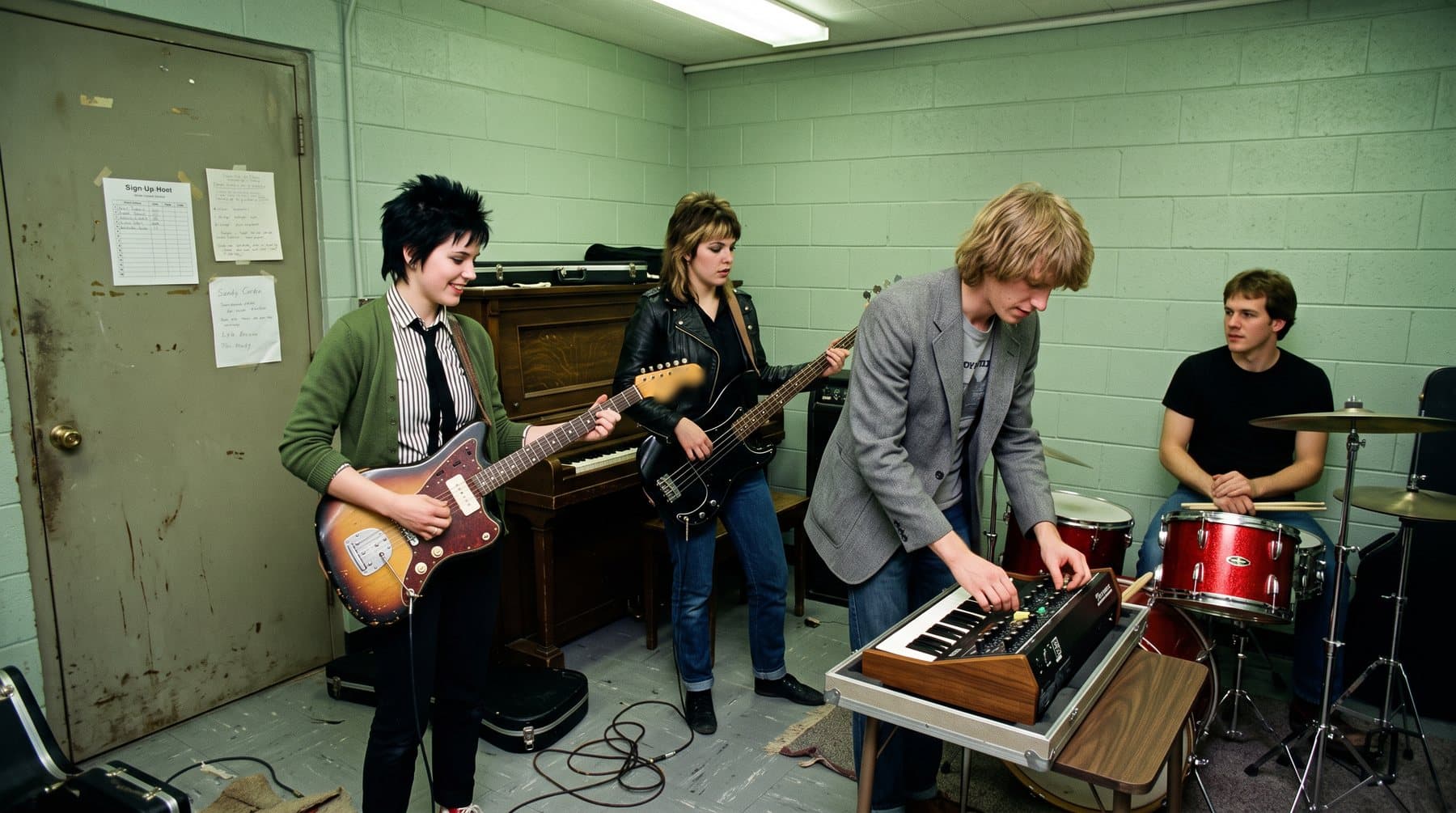
Four young musicians in a cramped university practice room in 1980, two women and two men, a drummer already seated behind his kit
A university practice room, Lawrence, 1980. Booked twice. The drummer was already seated.

On the Counter

Three recordings can be heard.

The archive holds audio for three tracks. Each is the take that was kept. The band would not have kept the same one.

  1. No. 012:45

    Alternate Current

    Applied Alternation · 1982

    First side, first track. The debut opens here.

  2. No. 022:38

    Second Guess

    No Two Sets Alike · 1984

    The robotic one. Kept from four nights of takes.

  3. No. 032:22

    Loose Wire

    No Two Sets Alike · 1984

    The tense one. Kept from four nights of takes.

Nothing is playing. Choose a recording.

Every take was different. These are the takes that were kept.

Dates

Several hundred shows. Seven on file.

The college-town circuit kept no setlists, because there was no setlist to keep. The archive keeps the dates it can verify. It punches one hole for each.

SHOW CARD

One punch per show. Card not redeemed.

Selected Dates

  1. 01Feb 2, 1981The Percolator, Lawrence
  2. 02Sep 19, 1981Kansas Union Ballroom, Lawrence
  3. 03Apr 3, 1982The Second Cup, Lawrence
  4. 04Nov 12, 1983Sunflower Ballroom, Topeka
  5. 05Jun 8, 1984The Nut House, Kansas City
  6. 06Mar 22, 1985Massachusetts Street, twenty minutes
  7. 07May 10, 1986The Percolator, Lawrence

Alternate. Then alternate that.

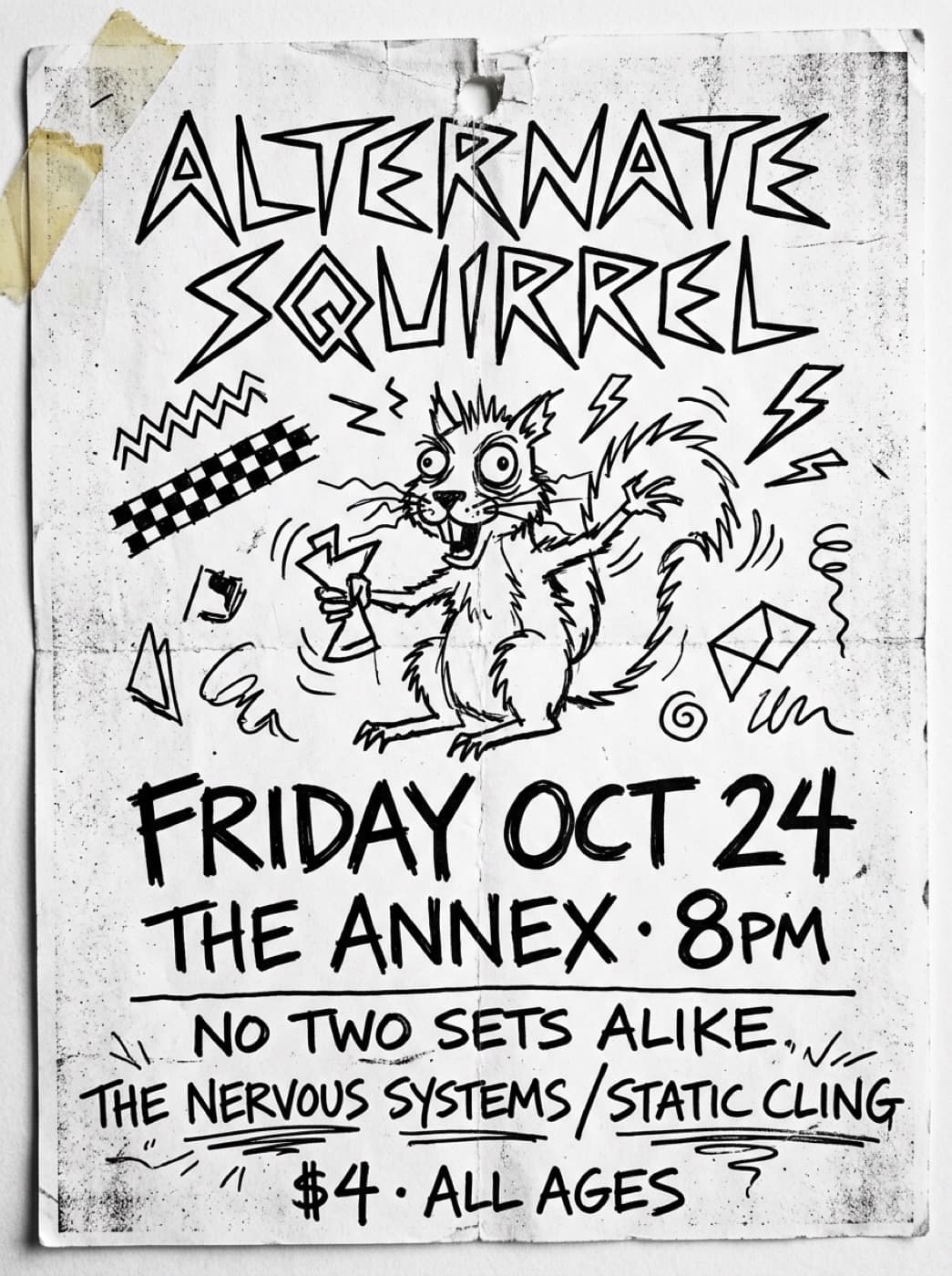
A photocopied show flyer with jagged hand-drawn lettering reading Alternate Squirrel and a drawing of a startled squirrel holding a cup
A flyer from the band's rooms. The archive has not matched it to a date.
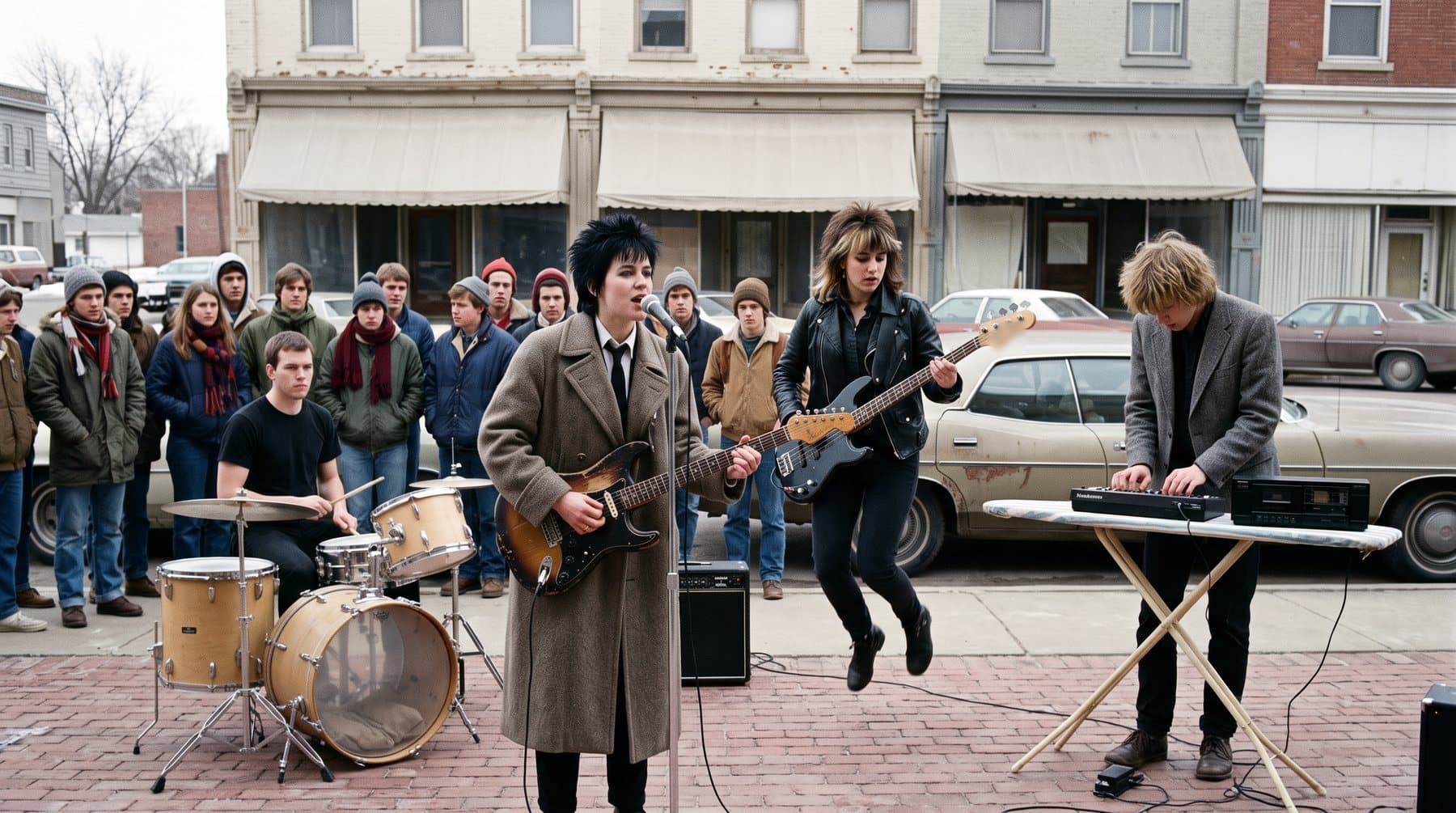
A four-piece band playing on a downtown sidewalk in a Kansas college town in March 1985, a small crowd standing in the cold
Massachusetts Street, March 22, 1985. Twenty minutes. Nobody could agree afterward on what was played.
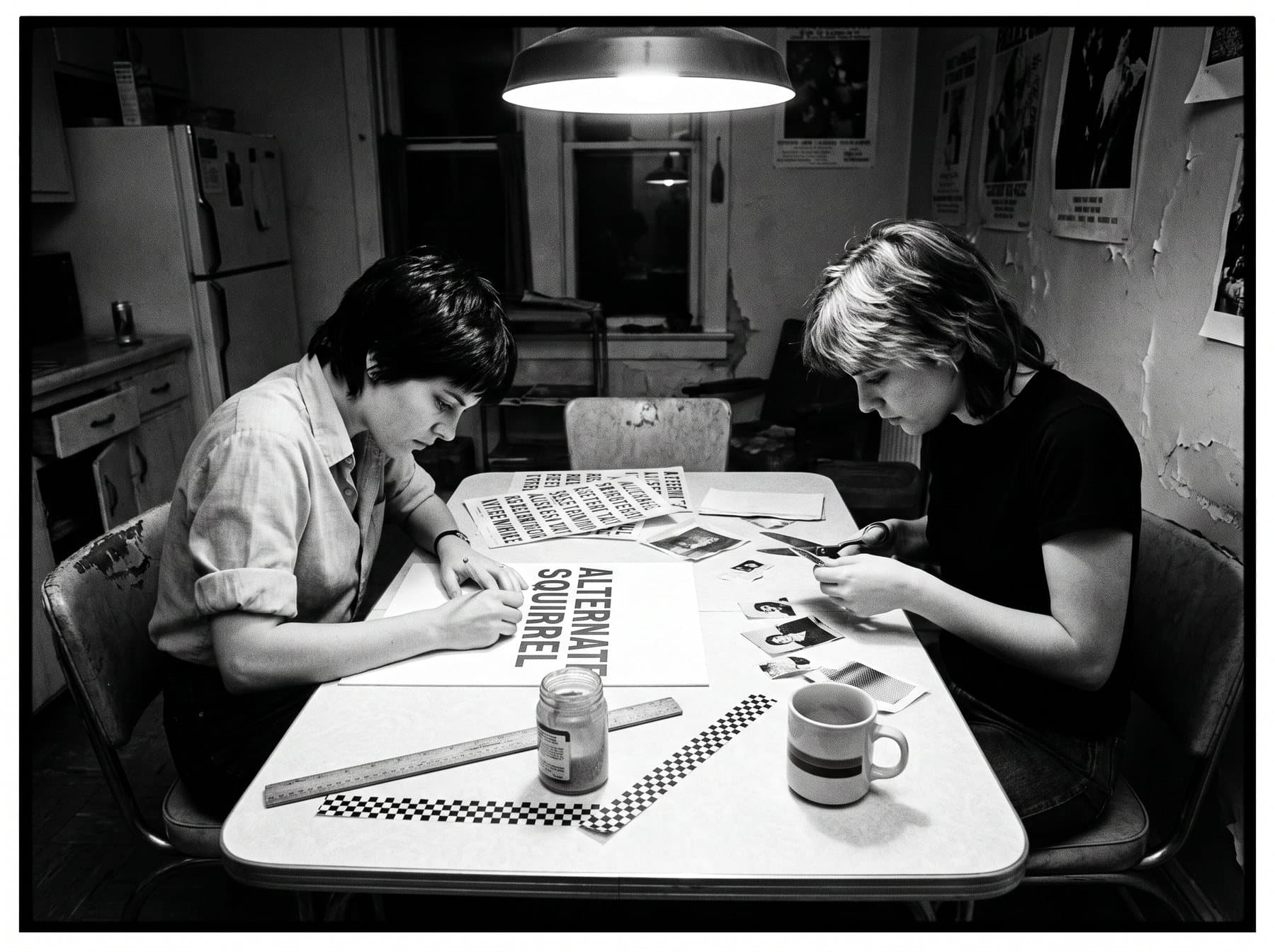
Two women at a kitchen table late at night pasting up a band flyer with rub-down letters, scissors and a coffee mug
Paste-up for a show flyer. Each run was laid out again from scratch.
A small, packed college-town room in spring 1986, a band mid-song under a single light, the bass player and singer in front
Lawrence, May 1986. The last date on file.

The Tab

Leave your name on the cup.

The band kept a mailing list on the backs of order tickets. The Sideband Label store keeps it now. Shirts, records and anything the archive confirms. No two orders will be described the same way.

Names are taken once. The archive will not ask twice.

On file

Name
Alternate Squirrel
Origin
Lawrence, Kansas
Active
1980–1986
Label
Skittish Records
Genre
New Wave / Post-Punk
Filed under
Jittery New Wave · Art-Punk · Nervous Pop
Method
Applied Alternation
Repeats on file
1986 only